Design Journal
Design Answers shares practical guidance for Austin and Central Texas homeowners planning custom homes, renovations, furnishings, and finishing details. Explore Susie Marion’s answers to the questions clients ask most often about creating a beautiful, functional, and thoughtfully resolved home.
Beautifully styled shelves should feel personal, balanced and connected to the surrounding room. The key is not owning more accessories—it is choosing, arranging and editing the right pieces.
Beautiful bathroom tile is only one part of a successful design. Material, scale, layout, grout, maintenance and installation details must all work together.
Artwork should relate to the furniture, architecture, and sightlines surrounding it. These practical guidelines help homeowners select the right scale, establish hanging height, and create arrangements that feel intentional.
A professionally furnished home does not require replacing everything you own. The right existing pieces can provide history and personality when their scale, condition, comfort, and role are considered within the complete design.
Plumbing fixtures affect far more than a room’s appearance. Early selections help the design and construction teams coordinate rough-ins, cabinetry, stone, tile, lighting, and installation before changes become complicated.
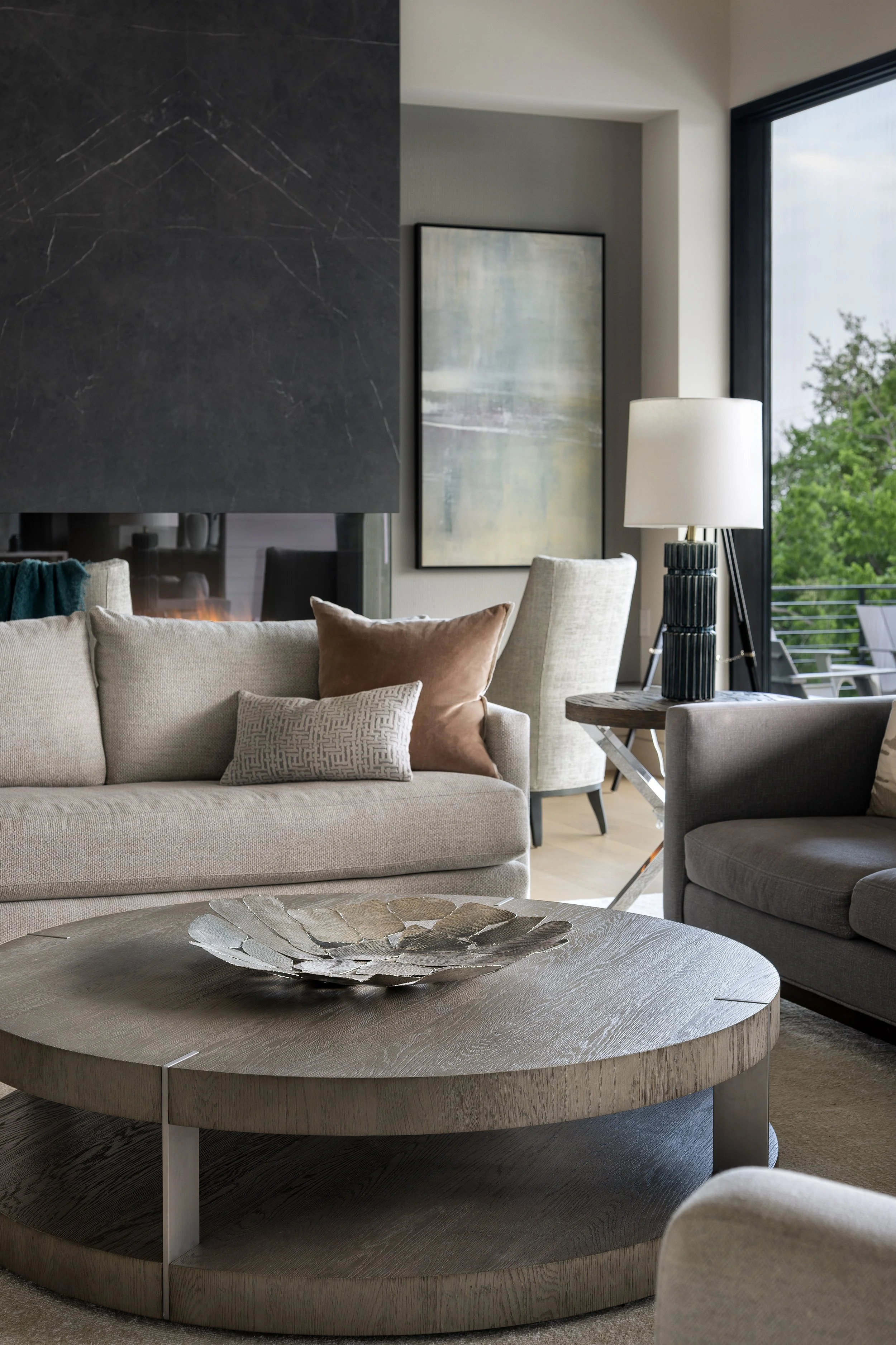
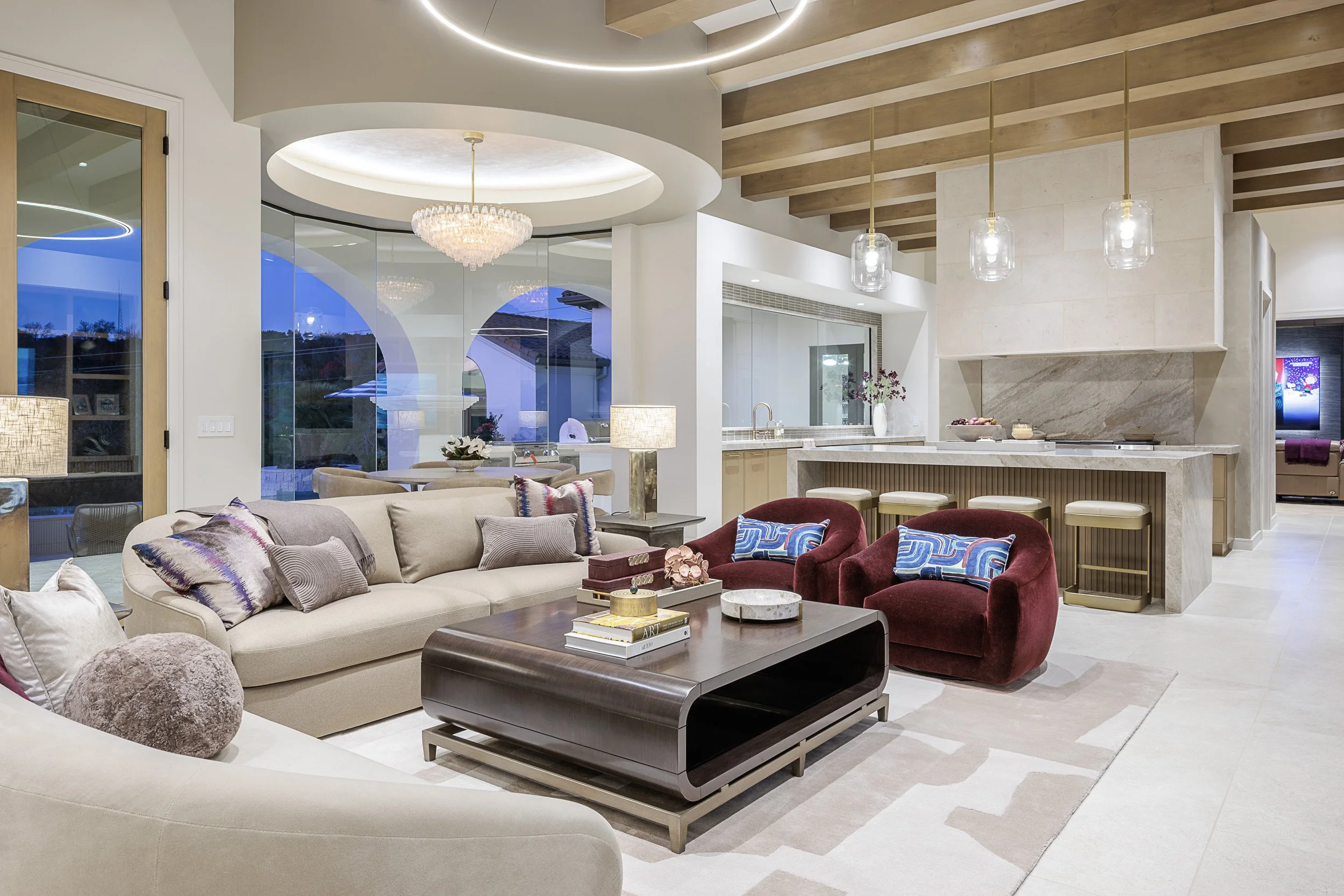
Custom furniture can solve scale, comfort, function, and design challenges that ready-made pieces cannot. Here is how we decide where customization adds meaningful value—and where a well-chosen stocked piece may be the better choice.
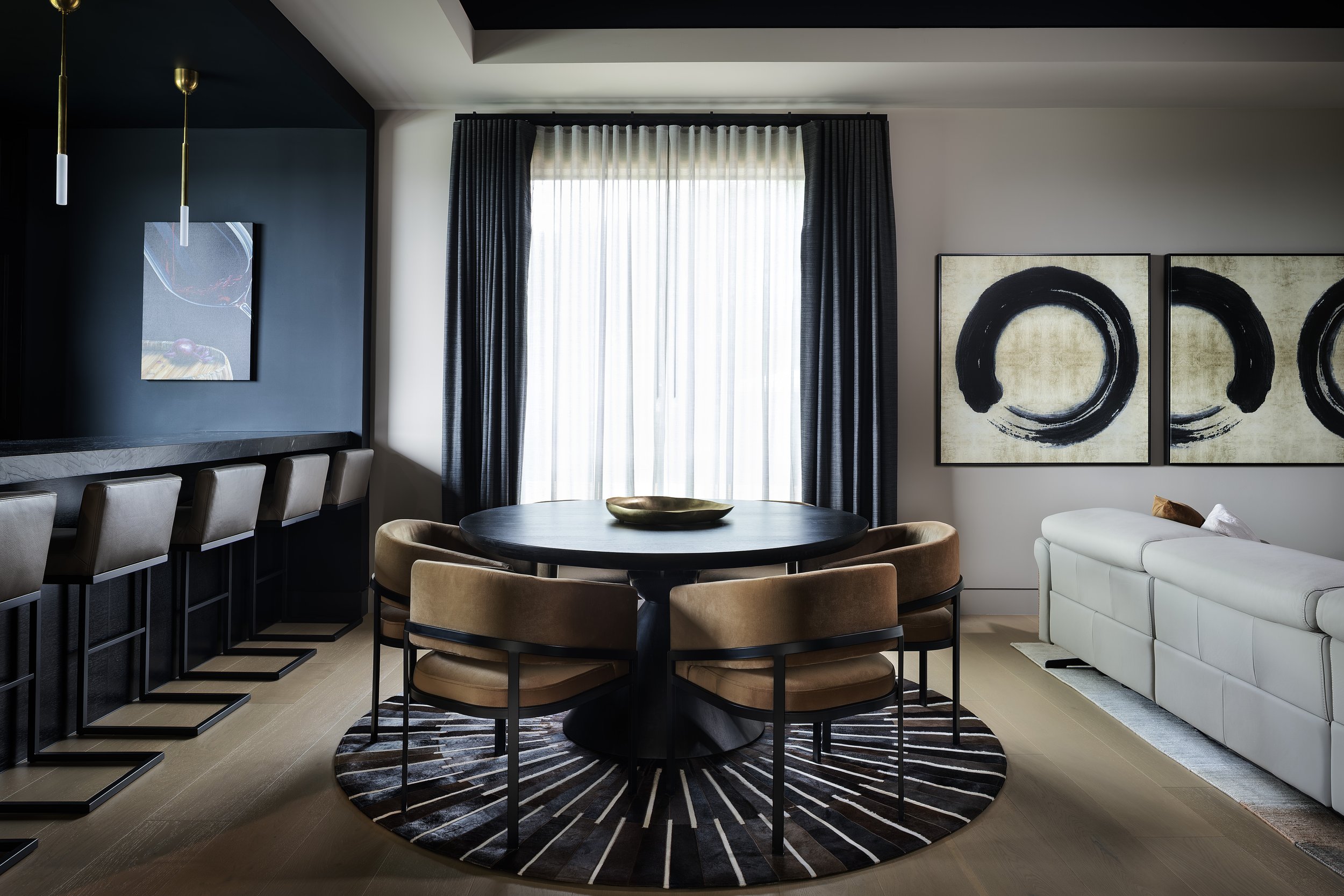
An area rug should anchor the furniture, support circulation, and bring the room’s colors and textures together. Here is how we choose rug size, material, and style for a beautifully furnished living room.
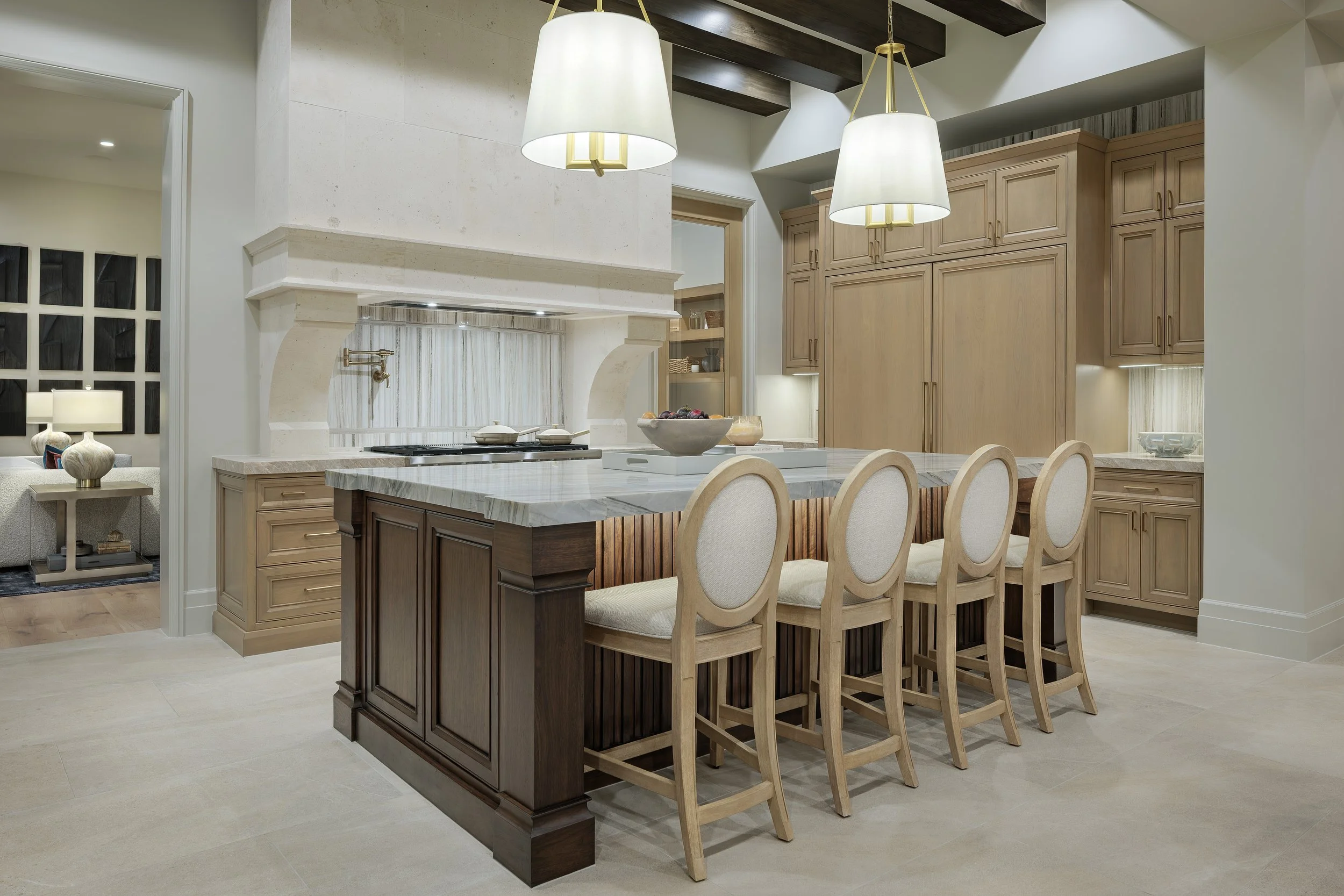
Countertops influence cabinetry, plumbing, lighting, backsplashes, and the construction schedule. Here is how we approach their timing, materials, and coordination throughout a custom home.
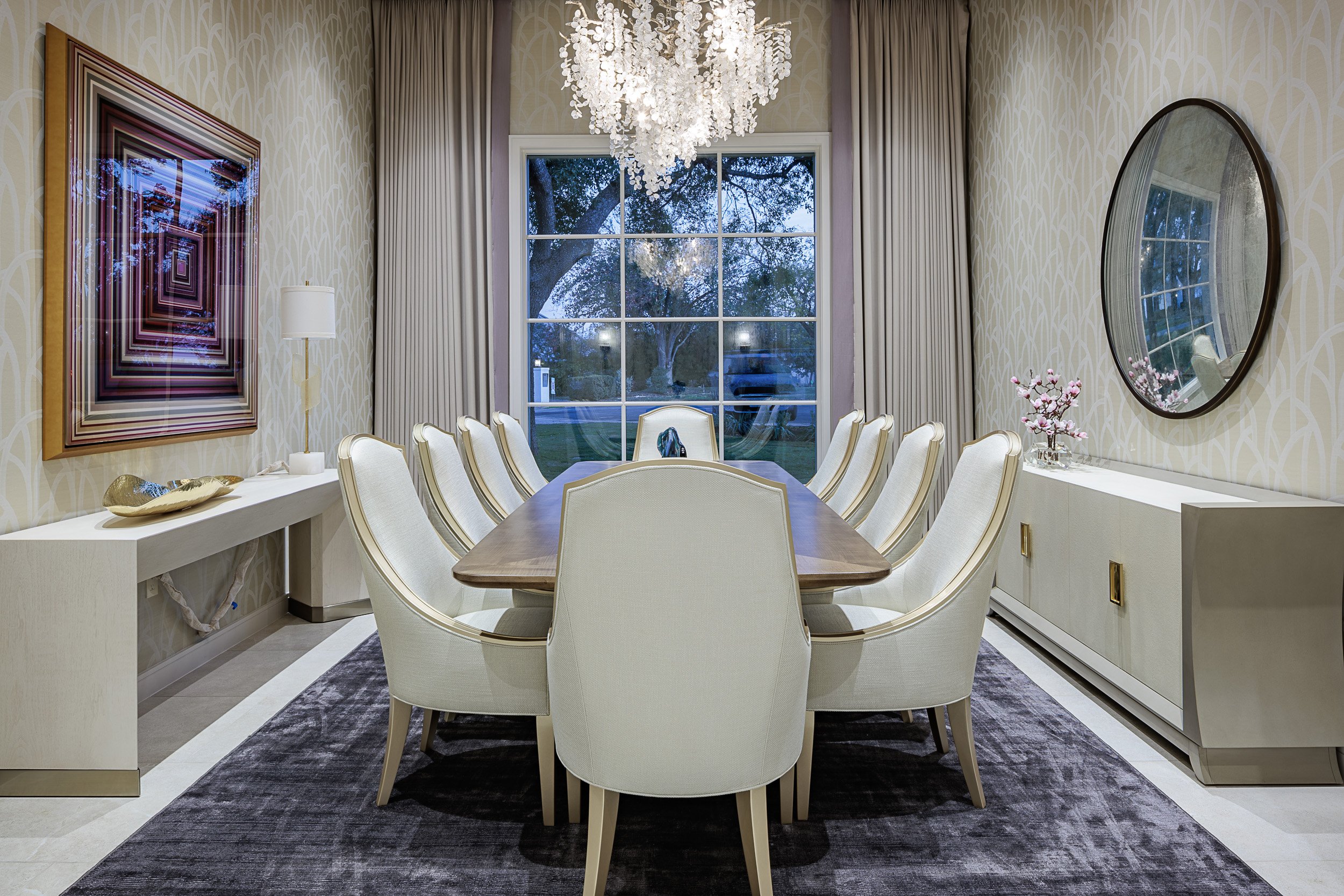
The right window treatments balance privacy, light control, architecture, and softness. Here is how we decide whether a custom home needs shades, drapery, or a thoughtfully layered combination.
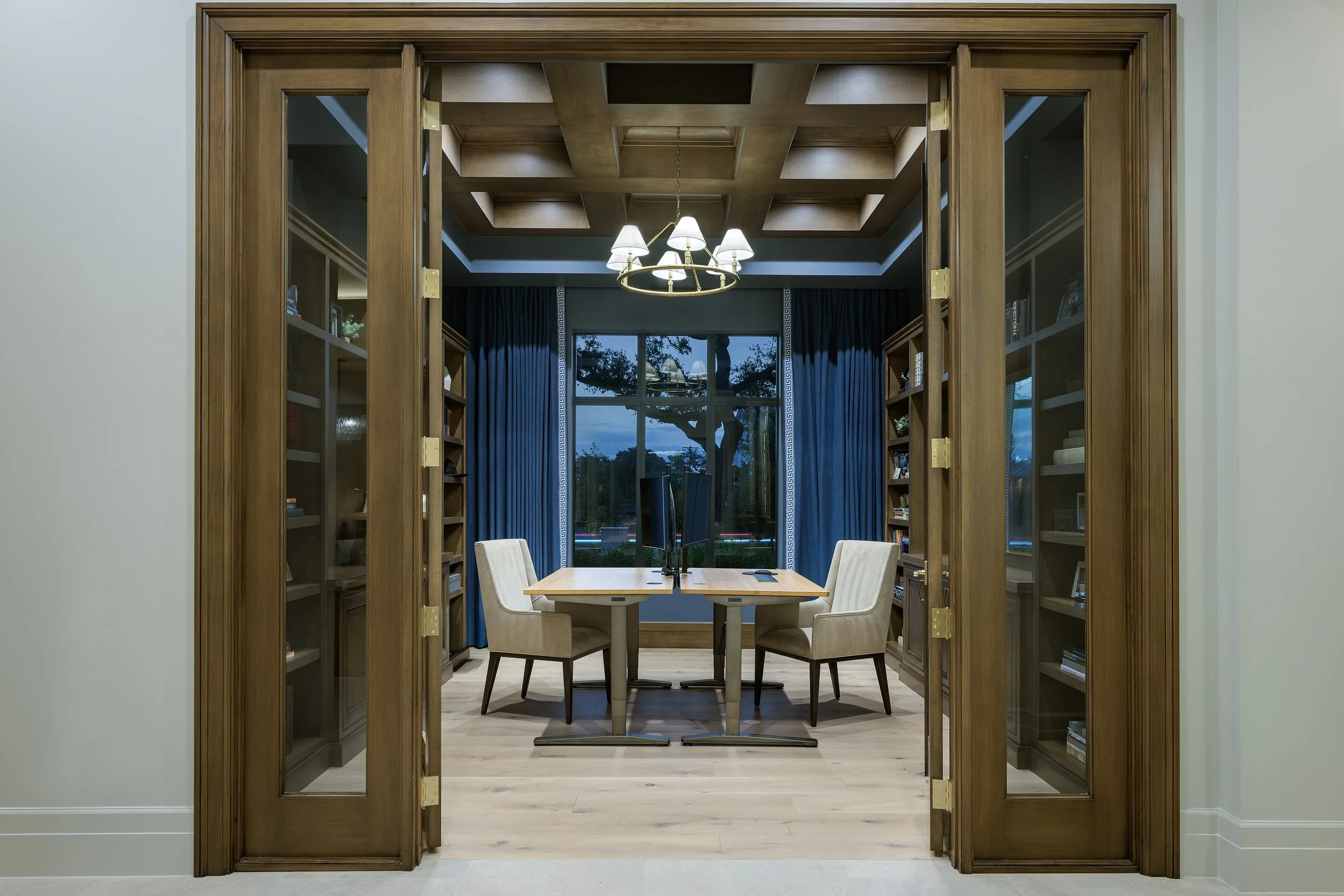
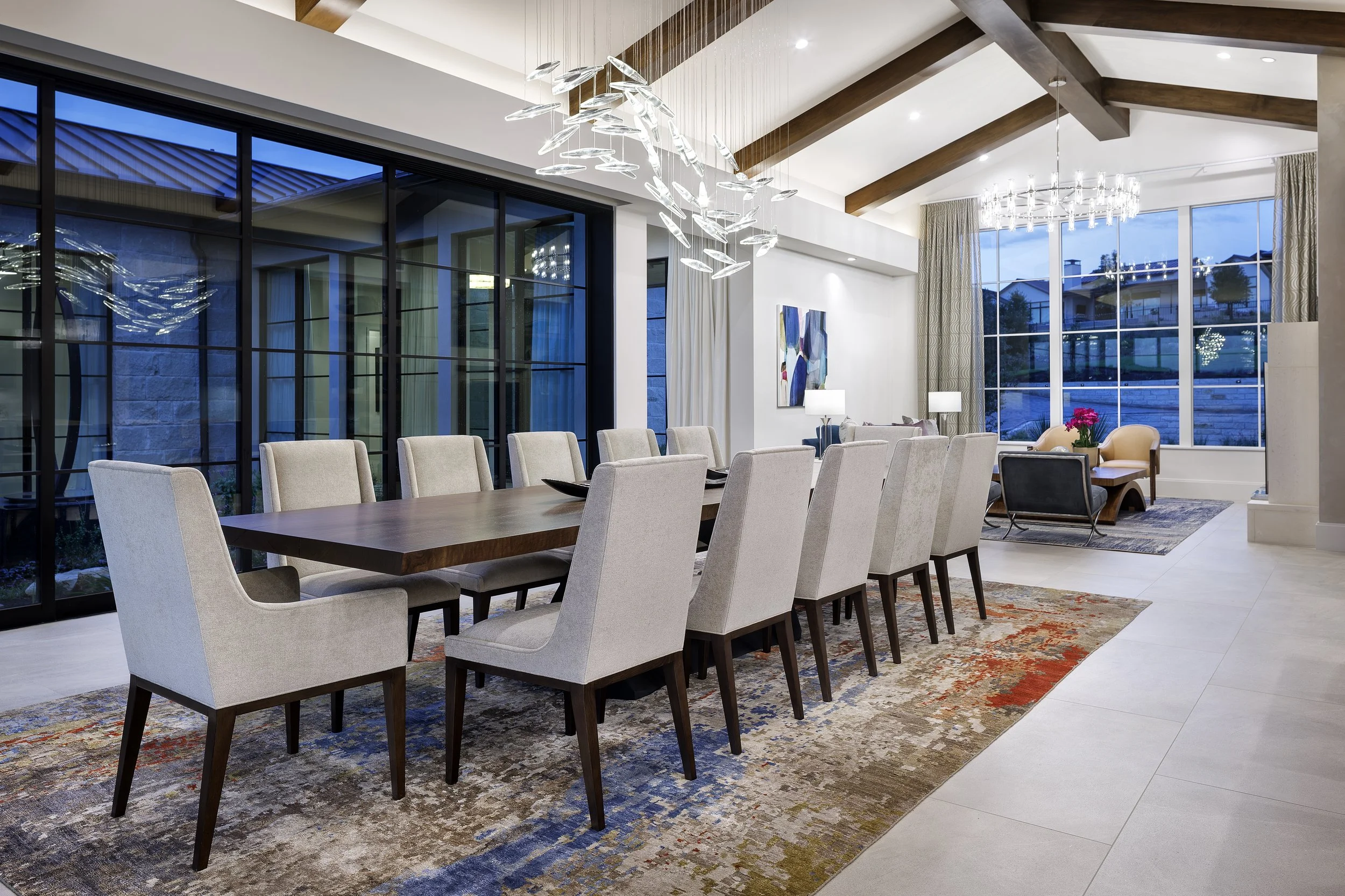
Decorative lighting should be selected earlier than many homeowners expect. Chandeliers, pendants, sconces, and lamps work best when their placement, scale, finishes, and electrical requirements are coordinated with the architecture and furnishings.
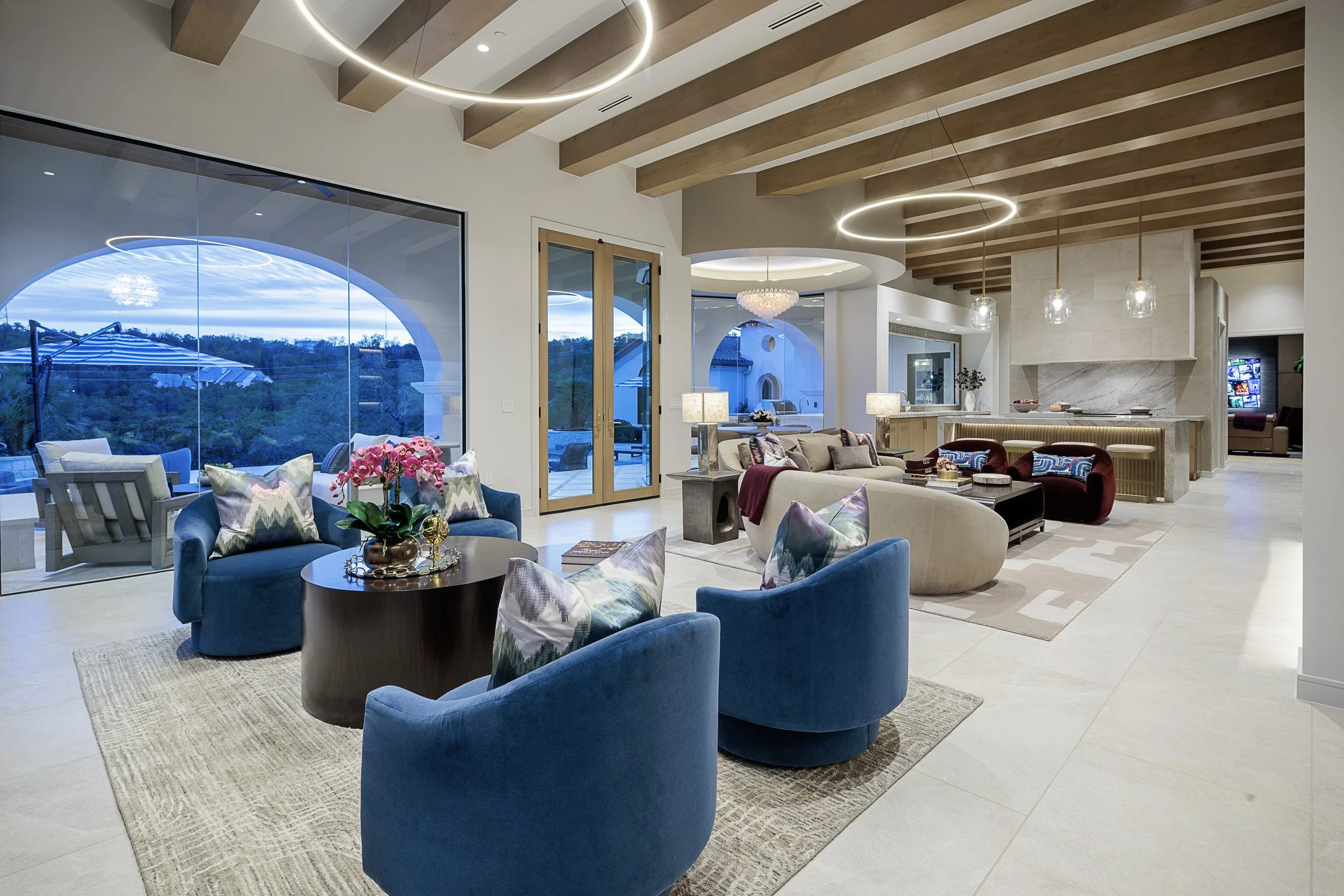
Furnishing a custom home should begin well before construction is complete. Starting early allows the floor plan, finishes, furniture, window treatments, art, and installation schedule to work together as one cohesive design.