Is Custom Furniture Worth It? What Austin Homeowners Should Know
Written by Susie Marion
Custom furniture can be one of the most valuable elements in a thoughtfully furnished home—but it is not automatically the right choice for every room or every piece.
The purpose of customization is not simply to make something unusual. It is to solve a specific design problem: a room with unusual proportions, a family that needs a particular level of comfort, an architectural feature that deserves a precise response, or a design vision that cannot be achieved with standard dimensions and finishes.
When we develop a furnishing plan, we consider custom, made-to-order, trade, vintage, antique, and ready-made options together. The best room is rarely created by choosing one category exclusively. It comes from knowing where customization will have the greatest effect and where a beautifully selected stocked piece will work just as well.
Why buy custom furniture?
Custom furniture allows a piece to be developed around the room and the homeowner instead of asking the homeowner to adapt to a predetermined product.
A custom sofa, dining table, banquette, bed, or cabinet can address:
Exact room dimensions
Unusual wall lengths or ceiling heights
Desired seat depth and firmness
The homeowner’s height and comfort preferences
A particular number of dining seats
Existing architectural features
Traffic patterns and clearances
A specific fabric, leather, wood, stone, or metal
Storage and technology requirements
Pets, children, entertaining, or frequent guests
A finish or color that relates to the rest of the home
The visual scale of a large custom residence
In a generously sized living room, standard furniture can sometimes look underscaled even when the individual pieces seem substantial in a showroom. In a more compact or architecturally complex space, a standard piece may waste valuable inches or interrupt circulation.
Customization gives us more control over those relationships.
The strongest reason to commission a piece is that it improves how the room looks, feels, or functions in a way that an available product cannot.
Is custom furniture always better than ready-made furniture?
No. “Custom” describes how a piece is specified or produced; it does not guarantee that the design, construction, comfort, or value is appropriate.
A well-made ready-made piece may be the better choice when:
Its proportions suit the floor plan
The construction and materials meet the project standard
The color and finish work with the design
It is comfortable for the homeowner
The lead time fits the schedule
It provides the necessary function
Customization would not materially improve the room
We often combine categories. A room might include a custom sofa because its length and seat depth are critical, a vintage side table for character, a trade coffee table that already has the correct scale, and commissioned drapery tailored to the architecture.
This layered approach prevents a home from feeling like a showroom set while allowing the budget to be focused where customization makes a meaningful difference.
Why is custom furniture more expensive?
Custom furniture generally involves more design time, specialized labor, material choices, and coordination than a mass-produced piece.
The price may reflect:
Design development and drawings
Engineering or shop drawings
Patternmaking and prototypes
Skilled upholstery, woodworking, metalwork, or stone fabrication
Premium interior construction
Custom dimensions
Special fabrics, leathers, trims, or finishes
Fabric matching and additional yardage
Hand-applied details
Crating and freight
Receiving and inspection
Local delivery and installation
A smaller production quantity
For upholstered furniture, cost is influenced by far more than the visible fabric. The frame construction, suspension, cushion materials, tailoring, pattern placement, trim, and labor all affect the finished piece.
For a custom table or case piece, the species and grade of wood, veneer layout, finish process, hardware, stone, metalwork, and structural requirements can substantially change the investment.
A higher price is worthwhile only when the resulting quality, function, longevity, or design impact supports the homeowner’s priorities.
Where should custom furniture be used in a luxury home?
We prioritize customization where scale, comfort, architecture, or function matters most.
Living-room seating
A principal sofa or sectional establishes the scale of the room and affects how the entire seating group functions. Custom dimensions can improve the relationship among the rug, cocktail table, fireplace, views, and surrounding chairs.
Dining tables
A custom dining table can be sized for the room, the desired number of guests, and the selected chairs. The base placement can be coordinated so guests have appropriate legroom and chairs do not collide with table supports.
Banquettes and breakfast areas
Built-in or freestanding banquettes often need exact dimensions. Seat height, cushion thickness, table clearance, access, outlets, windows, and adjacent cabinetry must be considered together.
Beds and headboards
A custom bed can respond to ceiling height, wall width, lighting, bedside tables, outlets, and window placement. It can also establish a strong focal point without relying on excessive decoration.
Consoles and media cabinetry
Custom casework can accommodate equipment, wiring, ventilation, storage, art, and architectural details while maintaining a refined appearance.
Occasional pieces
A distinctive cocktail table, desk, bench, or pair of side tables can give a room personality when the piece’s material or form supports the larger design.
Not every room needs a commissioned focal point. The goal is to use customization strategically, not simply extensively.
How do you decide whether a piece should be custom?
We begin with the floor plan.
Before selecting or designing furniture, we study the room’s architecture, circulation, focal points, views, door swings, windows, fireplace, built-ins, and connections to adjacent spaces. We then establish the dimensions and relationships of the principal pieces.
We ask:
What problem does customization solve?
Is there an available piece with the correct dimensions?
How important is comfort for this item?
Will the piece be used daily or occasionally?
Does it need to coordinate with an unusual architectural condition?
Is a specific material or finish essential?
Will the piece become a focal point?
Does the timeline allow for custom production?
Is the investment proportionate to its role?
Could the budget create more value elsewhere?
These questions keep the decision practical. A custom piece should earn its place in the plan.
How long does custom furniture take?
Lead times vary widely by maker, material, complexity, location, and current production schedule. The manufacturer or fabricator should provide the project-specific estimate before an order is approved.
The total process may include:
Concept development
Preliminary dimensions and materials
Pricing
Drawings or renderings
Client approval
Shop drawings
Material procurement
Fabrication
Finishing or upholstery
Quality review
Freight
Receiving and inspection
Delivery and installation
Changes made after approval can affect both cost and timing, particularly if materials have been ordered or fabrication has begun.
For a custom home, furnishings should be planned early enough to align with construction. At Marion Interior Design, our goal is to have furnishings ready for installation as the builder completes the home—not begin selecting them after move-in.
Who makes custom furniture?
Custom pieces may be produced by upholstery workrooms, cabinetmakers, furniture manufacturers, metal fabricators, stone fabricators, artisans, or multidisciplinary studios.
The right maker depends on the piece.
A workroom that excels at tailored upholstery may not be the right source for a sculptural dining table. A cabinetmaker experienced in architectural millwork may approach furniture differently from a studio specializing in heirloom case pieces.
When evaluating a source, we consider:
Relevant experience
Construction methods
Material expertise
Drawing and approval process
Finish quality
Ability to meet exact dimensions
Communication and documentation
Production capacity
Lead time
Packaging and freight experience
Warranty or service
References or prior work
Through Marion Interior Design’s furnishing process, the homeowner does not have to identify, compare, and coordinate every maker independently. We select the appropriate resources, develop the specifications, communicate approvals, and manage the piece as part of the complete room.
What should be approved before custom furniture goes into production?
Custom orders should be reviewed carefully because they are commonly nonreturnable.
Depending on the piece, approvals may include:
Overall dimensions
Seat height and depth
Arm and back height
Cushion construction
Wood or metal finish
Fabric, leather, trim, and placement
Pattern direction and matching
Stone selection
Hardware
Edge profiles
Base configuration
Drawings or renderings
Electrical or technology provisions
Delivery access
Final pricing
Lead time
For upholstery, a small fabric sample should be reviewed with the other room materials whenever possible. Color, texture, and scale can appear very different when seen beside the rug, drapery, flooring, and surrounding finishes.
For a table or case piece, finish samples are equally important. Natural materials vary, so homeowners should understand what variation is expected and desirable.
What happens when custom furniture arrives?
Delivery to the house should not be the first time a custom piece is inspected.
Our procurement process includes ordering, receiving, storage, and installation coordination. Furnishings are directed to a receiving facility, where they can be inspected before the installation day.
This provides an opportunity to identify freight damage, finish concerns, missing components, or other issues before the piece enters the completed home.
The installation plan may also need to address:
Door and hallway clearances
Elevators or stair turns
Protective floor and wall coverings
Assembly requirements
Placement of rugs before furniture
Electrical connections
Art and window-treatment sequencing
Removal of packing materials
Final positioning and styling
Custom home furnishing and installation in Austin is not simply a matter of selecting beautiful pieces. It is a coordinated process that continues until the home is fully arranged and ready to enjoy.
Can custom furniture work in a family home?
Absolutely. Customization can be especially useful when a room must be refined and hardworking.
We may specify performance fabrics, durable finishes, replaceable cushion components, forgiving textures, or dimensions that support how the family actually gathers. Rounded edges, appropriate seat heights, secure construction, and practical clearances can be considered from the beginning.
Durability does not require sacrificing beauty. The important step is defining the homeowner’s expectations honestly before materials and details are approved.
A formal room used primarily for entertaining may call for different decisions than the family’s everyday gathering space. Both can feel elevated while responding to their individual purpose.
How does Marion Interior Design use custom furnishings?
We use custom furnishings as one part of a complete, layered design.
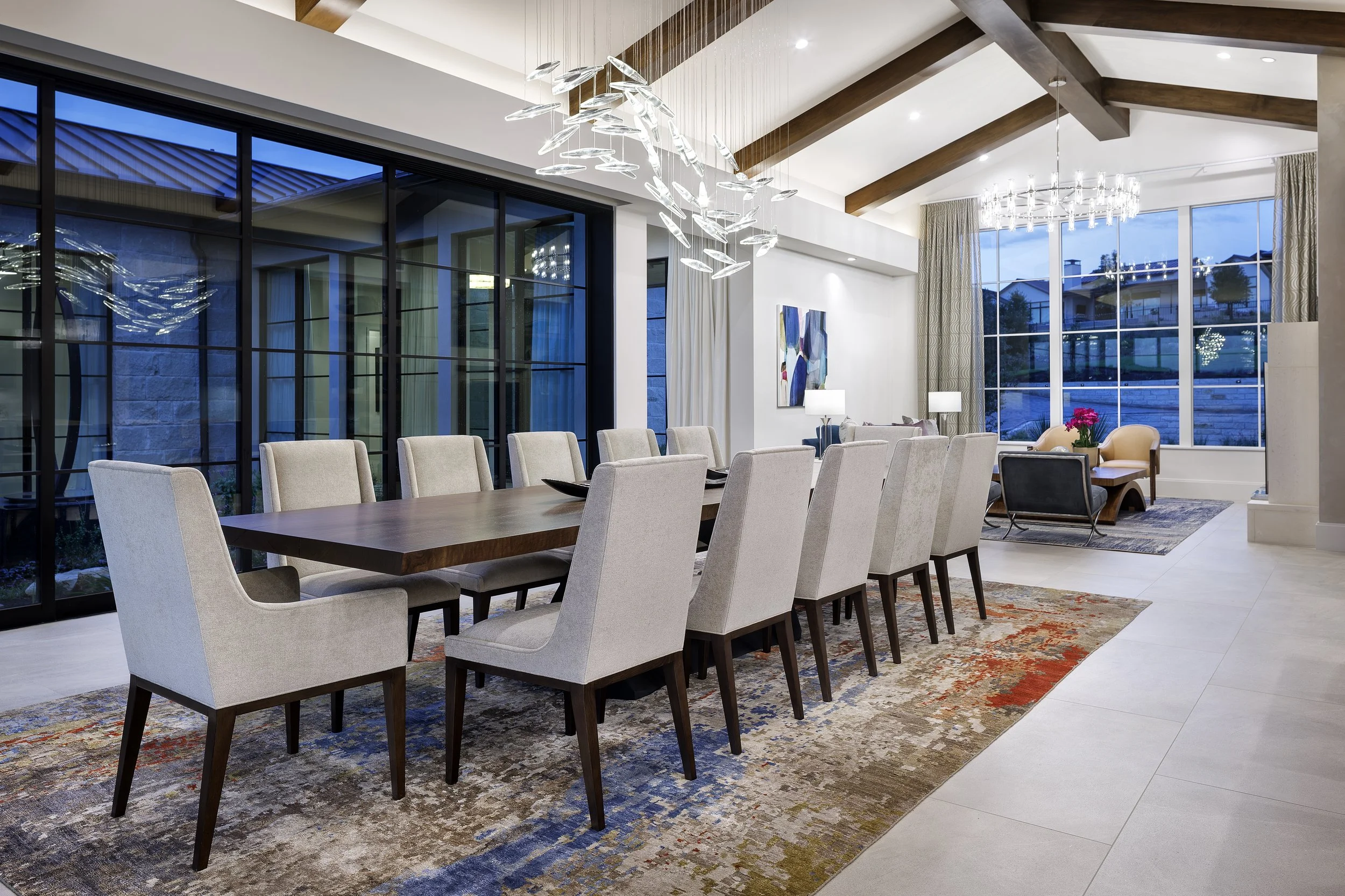
In Hillside Court, our team designed the home’s fixed finishes, furnishings, art, accessories, cabinetry, and trim as a coordinated vision. The project demonstrates the value of thinking about architecture and furnishings together rather than treating furniture as an afterthought.
We begin with the homeowner’s lifestyle, existing pieces, budget, and floor plan. From there, we determine which elements should be customized, which can be sourced through our trade resources, and how everything will be procured and installed.
The result should not look custom simply for the sake of being custom. It should look inevitable—as though every piece belongs exactly where it is.
The real value of custom furniture
Custom furniture is worthwhile when it creates a measurable improvement in scale, comfort, function, quality, or character.
It can allow a large room to feel properly furnished, solve an awkward architectural condition, provide a more comfortable fit, or introduce craftsmanship that gives the home lasting personality.
The most successful furnishing plans balance aspiration with practicality. They use customization where it matters, excellent ready-made pieces where they work, and thoughtful coordination throughout.