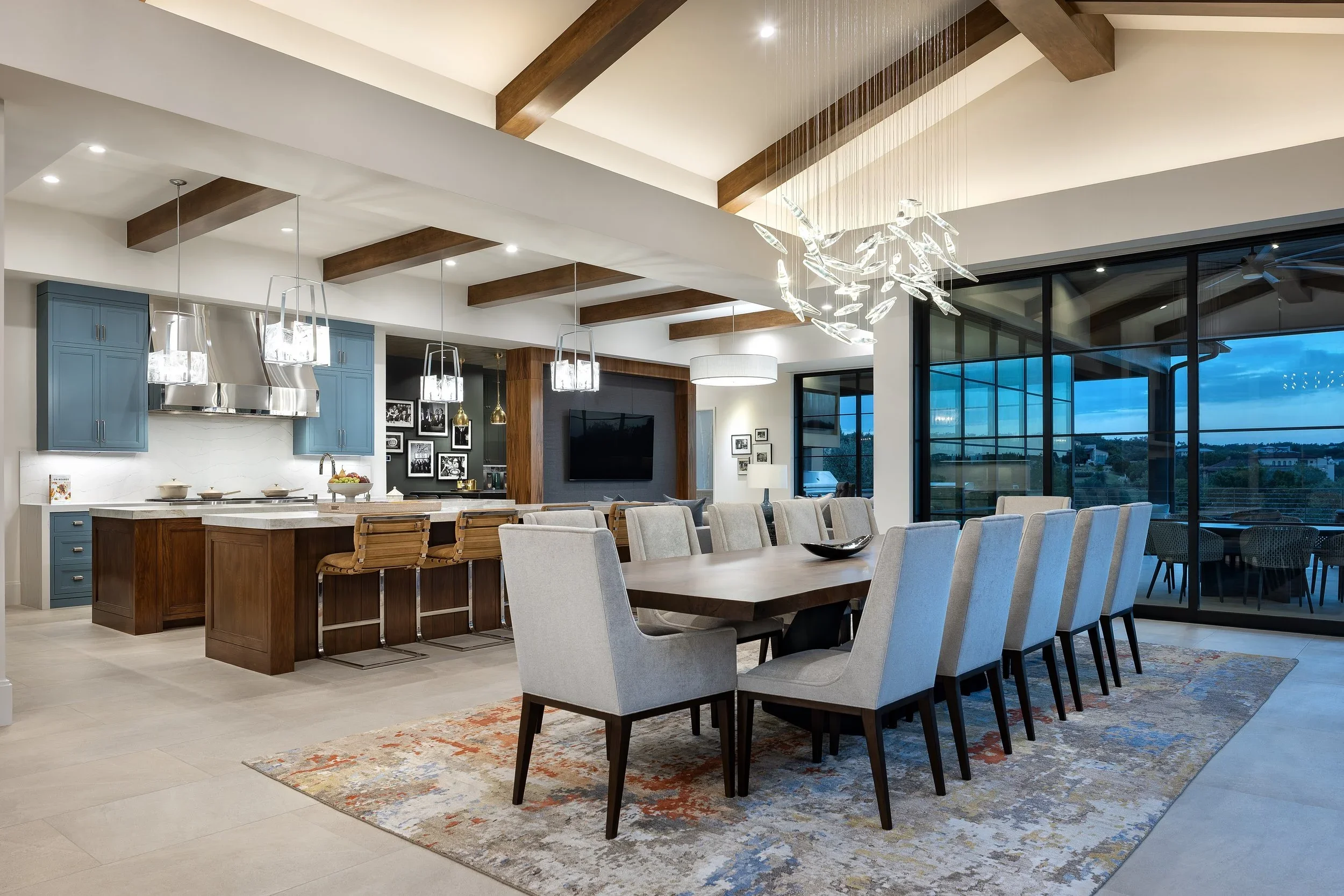
How Do Furnishings, Procurement and Turnkey Installation Work?
Written by Susie Marion
Furnishing a custom home is often described as the enjoyable part of interior design—and it is—but creating a home that feels complete requires much more than selecting beautiful furniture.
The process begins with a thoughtful plan. Every sofa, rug, light fixture, window treatment, artwork and accessory must relate to the architecture, fit the room correctly and support the way the homeowner wants to live. Those selections then need to be priced, approved, ordered, tracked, received, inspected, stored and installed in the proper sequence.
That is the difference between purchasing furniture and creating a turnkey home.
At Marion Interior Design, we approach furnishings as an extension of the architecture and fixed finishes. The goal is not to fill rooms. It is to create a cohesive, personal home in which every element feels considered and ready for the client to enjoy.
When should the furnishing process begin for a custom home?
The furnishings process should begin once the home’s fixed finishes and overall design direction are sufficiently established—not after construction is complete.
Starting early gives us time to prepare scaled furniture plans, establish an appropriate furnishings budget and determine whether meaningful existing pieces will be incorporated. It also allows furniture dimensions to inform important architectural details such as floor outlets, lighting placement, window-treatment pockets and circulation paths.
For a large custom home, many furnishings may require lengthy design and production periods. Custom upholstery, handmade rugs, specialty finishes and commissioned pieces cannot always be sourced at the last minute. Beginning during construction helps the furnishings schedule align more closely with the builder’s completion schedule.
The ideal result is a home whose rooms are properly furnished and ready to live in, rather than a finished structure that still requires months of piecemeal shopping.
What does furniture procurement include?
Procurement is the detailed work that happens after the client approves a furnishing selection.
A full-service interior designer in Austin may coordinate final specifications, dimensions, fabrics and finishes; pricing and approvals; purchase orders; custom drawings; vendor communication; lead times; freight; receiving and inspection; storage; delivery; installation scheduling; and budget and order-status reporting.
These steps matter because a furnishing order does not end when the purchase is placed. A custom table may involve drawings, finish samples, freight coordination and careful placement. An upholstered piece may require fabric availability checks, yardage confirmation and production approval. Rugs, window treatments, art and lighting each have their own requirements.
Our procurement team manages these moving parts as one coordinated plan. That oversight gives the design team a clearer view of the complete home and gives the homeowner one organized process rather than dozens of unrelated orders and delivery appointments.
Why are receiving and storage important?
For a professionally managed project, furnishings are generally delivered to a receiving facility rather than arriving individually at the client’s home.
At receiving, pieces can be inspected for visible damage, missing components or inconsistencies before the final installation. Items can then be stored until the house and the complete group of furnishings are ready.
This is particularly valuable during new construction. Delivering finished furniture into an active jobsite can expose it to dust, damage and repeated handling. Storing approved pieces off-site also makes it possible to organize installation in a logical sequence instead of interrupting the household with a long series of deliveries.
What happens during turnkey installation?
Turnkey installation is the carefully planned transformation from an empty or partially completed house into a fully arranged home.
Before installation, our team coordinates the schedule, confirms site readiness and plans the order in which the rooms will come together. Rugs may need to be installed before heavy furniture. Window treatments, lighting and artwork require coordination with specialized installers. Large pieces must be checked against doorways, stairs and other access points.
During installation, furnishings are placed according to the approved plans. Art is hung, window treatments are completed and accessories, linens and plants are layered into the rooms. The design team adjusts spacing, scale and styling so the entire home reads as one composition.
The final walkthrough and reveal are important parts of the process. The client is not simply receiving a collection of deliveries. They are returning to a home that has been assembled, styled and prepared for everyday life.
Does turnkey design mean the home will feel impersonal?
No. Turnkey describes the level of completion and coordination—not a generic aesthetic.
A personal home begins with careful listening. We learn how the family gathers, entertains, relaxes and moves through the house. We consider the pieces they already love, the degree of formality they prefer, their comfort expectations and the character they want the home to express.
A finished interior may combine custom furnishings, trade pieces, antiques, family objects, commissioned art and thoughtfully retained existing furniture. The designer’s role is to create the relationship among those elements so the finished home feels collected and distinctly connected to its owners.
What is the advantage of managing furnishings as part of the whole home?
When furnishings are planned together with architecture and fixed finishes, decisions support one another. The size of a seating group can relate properly to the room. The rug can reinforce the furniture plan. Drapery can be designed for the actual windows. Artwork can respond to the wall proportions, and lighting can illuminate both the room and the pieces within it.
This whole-home approach also helps the team direct the investment thoughtfully. Not every piece needs to be custom, and not every room needs the same level of detail. We can identify where customization will make a meaningful difference and where an excellent ready-made option is the smarter choice.
For homeowners undertaking luxury home furnishing in Austin or Central Texas, coordinated design and procurement provide more than convenience. They create continuity—from the first floor plan through the final accessory—and allow the house to feel complete from the moment the client comes home.
Planning a new home or a complete furnishing project? Contact Marion Interior Design to discuss a turnkey design, procurement and installation plan tailored to your home.